
BBA Course Details: Fees 2026, Eligibility, Admission, Subjects & Career Scope
A BBA (Bachelor of Business Administration) is a popular undergraduate course for students who want to build a career in business and management. This article explains the BBA course details, including fees 2026, eligibility, admission process, subjects, specialisations, and career scope in simple words. It also covers top job opportunities, salary, and higher study options after BBA. Read this guide to understand whether a BBA course is the right choice for your future.What is a BBA Course?
BBA stands for Bachelor of Business Administration. It is a 3-year undergraduate course that teaches students about business, management, finance, marketing, human resources, and entrepreneurship. The course is divided into 6 semesters and helps students develop leadership, communication, and decision-making skills. It is one of the most popular courses after Class 12 for students who want to build a career in business or management.
BBA Course Highlights 2026
| Particulars | Details |
| Course Name | Bachelor of Business Administration (BBA) |
| Course Level | Undergraduate |
| Course Duration | 3 Years (6 Semesters) |
| Eligibility | Class 12 from a recognised board |
| Admission Process | Merit-Based or Entrance Exam |
| Average Fees | ₹50,000 to ₹5 lakh (varies by college) |
| Popular Specialisations | Finance, Marketing, HR, Business Analytics, International Business |
| Average Starting Salary | ₹3 LPA to ₹8 LPA |
| Higher Studies | MBA, PGDM, MMS, M.Com |
Why Choose a BBA Course?
A BBA course offers many benefits to students who want to enter the corporate world or start their own business.
Some major advantages include:
- Builds strong management skills
- Improves leadership and communication
- Offers internships and practical learning
- Opens career opportunities in many industries
- Good foundation for MBA and other management courses
- Suitable for students from all streams
BBA Course Duration
The BBA course lasts for 3 years and is divided into 6 semesters. Each semester includes classroom learning, assignments, presentations, projects, and examinations. Many colleges also provide internships during the course to give students practical industry experience.
BBA Eligibility Criteria 2026
Students must meet the following eligibility requirements:
- Must have passed Class 12 from a recognised board.
- Students from Commerce, Science, and Arts streams can apply.
- Most colleges require 45%–60% marks in Class 12.
- Reserved category students may receive relaxation according to college rules.
- Some universities may conduct entrance exams or personal interviews.
BBA Admission Process 2026
Admission to BBA courses generally follows these steps:
Merit-Based Admission
- Apply through the college website.
- Submit Class 12 marks.
- Colleges release merit lists.
- Selected students complete document verification and fee payment.
Entrance Exam-Based Admission
Some universities conduct entrance exams for admission.
The admission process includes:
- Filling the application form
- Appearing for the entrance exam
- Personal Interview (PI) or Group Discussion (GD), if required
- Counselling
- Final admission
Popular BBA Entrance Exams 2026
Some well-known entrance exams include:
- CUET UG
- NPAT
- SET
- IPU CET (where applicable)
- University-specific entrance exams
Admission criteria vary from one university to another.
BBA Course Fees 2026
The fee structure depends on the type of college.
| College Type | Average Annual Fees |
| Government Colleges | ₹20,000 – ₹80,000 |
| Private Colleges | ₹80,000 – ₹2 lakh |
| Premium Business Schools | ₹2 lakh – ₹5 lakh |
BBA Subjects
The syllabus may differ slightly between universities, but common subjects include:
First Year
- Principles of Management
- Business Communication
- Financial Accounting
- Business Economics
- Business Mathematics
- Computer Applications
Second Year
- Marketing Management
- Human Resource Management
- Business Law
- Financial Management
- Organisational Behaviour
- Business Statistics
Third Year
- Strategic Management
- Entrepreneurship
- International Business
- Operations Management
- Business Ethics
- Project Work
- Internship
Popular BBA Specialisations
Students can choose specialisations according to their interests.
Popular options include:
- Marketing Management
- Finance
- Human Resource Management (HR)
- Business Analytics
- Digital Marketing
- International Business
- Operations Management
- Entrepreneurship
- Retail Management
- Banking and Insurance
Skills Required for BBA
Students should develop the following skills:
- Leadership
- Communication
- Teamwork
- Problem-solving
- Decision-making
- Analytical thinking
- Time management
- Presentation skills
- Business knowledge
Career Opportunities After BBA
A BBA degree offers career opportunities across different industries. Some popular job roles include:
| Job Role | Average Salary |
| Business Development Executive | ₹3–6 LPA |
| Marketing Executive | ₹3–6 LPA |
| HR Executive | ₹3–5 LPA |
| Sales Manager | ₹4–7 LPA |
| Financial Analyst | ₹4–8 LPA |
| Operations Executive | ₹3–6 LPA |
| Customer Relationship Manager | ₹3–5 LPA |
| Management Trainee | ₹4–8 LPA |
Top Recruiters After BBA
Many leading companies hire BBA graduates, including:
- Deloitte
- TCS
- Infosys
- Wipro
- Accenture
- HDFC Bank
- ICICI Bank
- Axis Bank
- Amazon
- Flipkart
Higher Studies After BBA
Students can continue their education after graduation.
Popular options include:
- MBA
- PGDM
- MMS
- M.Com
- Digital Marketing Courses
- Data Analytics
- Chartered Financial Analyst (CFA)
- Company Secretary (CS)
Who Should Choose BBA?
A BBA course is suitable for students who:
- Want to become managers
- Plan to start their own business
- Wish to pursue an MBA later
- Enjoy business and finance
- Want corporate career opportunities
- Have leadership and communication skills
Advantages of Studying BBA
Some major benefits are:
- Early exposure to business management
- Better communication and leadership skills
- Internship opportunities
- Strong career growth
- Preparation for MBA
- Better understanding of business operations
- Opportunities in both private and government sectors
Conclusion
BBA is one of the best undergraduate management courses for students after Class 12. It provides knowledge of business, finance, marketing, human resources, and entrepreneurship. The course helps students develop practical skills and prepares them for careers in the corporate world. Graduates can either start working immediately or continue higher education through an MBA or other professional courses. With growing demand for skilled management professionals, a BBA degree offers strong career opportunities in 2026 and beyond.
FAQs
1. What are the BBA course details in 2026?
The BBA course is a 3-year undergraduate degree divided into six semesters. It covers subjects like management, marketing, finance, human resources, accounting, and business communication.
2. What is the eligibility for BBA admission in 2026?
To get BBA admission in 2026, students must have passed Class 12 from a recognised board. Most colleges require 45% to 60% marks, while some universities also conduct entrance exams.
3. What are the BBA course fees in 2026?
The BBA course fees in 2026 generally range from ₹20,000 to ₹5 lakh, depending on whether the college is government, private, or a premium institution.
4. What subjects are taught in a BBA course?
The BBA subjects include Principles of Management, Business Economics, Financial Accounting, Marketing Management, Human Resource Management, Business Law, Financial Management, Entrepreneurship, and Strategic Management.
5. What is the career scope after a BBA course?
The career scope after BBA is excellent. Graduates can work as Business Development Executives, Marketing Executives, HR Executives, Financial Analysts, Sales Managers, or pursue higher studies such as an MBA or PGDM.
Latest Articles
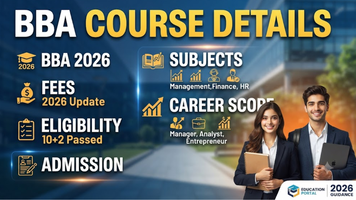
BBA Course Details: Fees 2026, Eligibility, Admission, Subjects & Career Scope
Kirti Chauhan
Jul 03 2026
Intelligent Textile Design Course: Fees 2026, Eligibility, Admission, Career Opportunities & Industry Scope
Kirti Chauhan
Jul 03 2026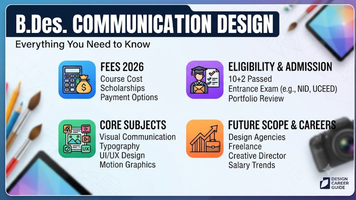
B.Des Communication Design: Fees 2026, Eligibility Criteria, Admission, Subjects & Future Scope
Kirti Chauhan
Jul 02 2026
B.Des Advanced Animation & VFX: Fees, Eligibility, Admission, Scope, Salary & Career Opportunities (2026)
Kirti Chauhan
Jul 02 2026
B.Des Game Design: Fees 2026, Eligibility, Admission, Course Details & Gaming Industry Careers
Kirti Chauhan
Jul 01 2026
B.Des Product Design with AI: Fees 2026, Eligibility Criteria, Admission, Skills, Career Options & Placements
Kirti Chauhan
Jul 01 2026
Colleges with the Highest Average Salary for MBA in Delhi NCR 2026
Kirti Chauhan
Jun 30 2026
B.Des Fashion Design: Subjects, Eligibility, Fees 2026, Admission, Jobs & Future Scope
Kirti Chauhan
Jun 30 2026
B.Des (Hons.): Course Details, Fees 2026, Eligibility, Admission & Career Scope
Kirti Chauhan
Jun 30 2026
BA in Film, TV & Web Series: Subjects, Fees 2026, Eligibility Criteria, Admission, Skills & Placement Opportunities
Kirti Chauhan
Jun 29 2026
Learn More, Grow Faster
Get Updates Straight to Your Inbox!