
How to Become an Electrical Engineer in India in 2026: Course, Eligibility, Fees & Job Opportunities
Career guide for electrical engineering: courses, prerequisites, costs, and employment in India.Electrical engineering is one of the popular branches in India. Electrical engineers design, develop and maintain systems like power plants, machines and control systems. As renewable energy, automation and electronics grow the demand for engineers increases in many industries.
This article explains how to become an electrical engineer in India in 2026 including courses, eligibility, fees and career opportunities.
What Does an Electrical Engineer Do?
Electrical engineers work with equipment and systems. Their job includes designing circuits, managing power systems and maintaining machines used in industries. They work in sectors like:
- Power generation and distribution
- Electronics and telecommunications
- Manufacturing and automation
- Aerospace and automotive industries
Courses to Become an Electrical Engineer
Students can pursue electrical engineering courses based on their career goals.
Diploma in Electrical Engineering
Duration: 3 years
Eligibility: Class 10 with Science and Mathematics
Offered by institutes and technical colleges
This course helps students start technical jobs early or continue later with lateral entry into B.Tech in Electrical Engineering.
B.Tech / B.E. In Electrical Engineering
Duration: 4 years
Eligibility: Class 12 with Physics, Chemistry and Mathematics (PCM)
This is the common course for becoming an electrical engineer in India. Electrical engineers do a lot of work in systems.
M.Tech in Electrical Engineering
Duration: 2 years
Eligibility: B.Tech in related engineering field
Students usually pursue M.Tech in Electrical Engineering for advanced knowledge and research opportunities in electrical engineering.
Eligibility Criteria
The eligibility requirements may vary by college. The general criteria include:
Students must pass Class 12 with PCM subjects.
They should have 50–60% marks in Class 12 from a recognised board.
For courses students need a B.Tech degree with at least 55–60% marks.
Entrance Exams for Electrical Engineering
Most engineering colleges in India offer admission through entrance exams. Popular exams include:
- JEE Main
- JEE Advanced
- BITSAT
- State-level exams like MHT CET, WBJEE and TS EAMCET
These exams help students get admission into engineering colleges for electrical engineering.
Fees for Electrical Engineering Courses
The course fees depend on the type of institution.
Government colleges: ₹50,000 – ₹2.5 lakh per year
Private colleges: ₹1.5 lakh – ₹4 lakh per year
The total cost for a four-year B.Tech programme in Electrical Engineering may range from ₹4 lakh to ₹15 lakh depending on the institute.
Top Government Colleges for Electrical Engineering
government institutes in India offer quality electrical engineering programmes.
Popular options include:
- Indian Institutes of Technology (IITs)
- National Institutes of Technology (NITs)
- Delhi Technological University (DTU) Delhi
- Jadavpur University, Kolkata
- Anna University, Chennai
These colleges provide technical training, research facilities and good placement opportunities for electrical engineers.
Job Opportunities After Electrical Engineering
Electrical engineers can work in both the government and private sectors.
Common job roles include:
- Electrical Design Engineer
- Power Systems Engineer
- Control Systems Engineer
- Electrical Project Engineer
- Maintenance Engineer
Top recruiters include companies such as BHEL, Siemens, Schneider Electric and Adani Power. Electrical engineers have job opportunities.
Fresh graduates usually earn a salary of around ₹4–6 lakh per year depending on skills and experience in electrical engineering.
Electrical engineering is a career option for students interested in technology and power systems. By completing a B.Tech in Electrical Engineering from a recognised college students can build careers in industries like energy, electronics and manufacturing.
With growing demand for electricity, automation and renewable energy electrical engineers will continue to have job opportunities in India in the coming years. Electrical engineers will be, in demand.
Latest Articles

Top Emerging Courses After 12th in India in 2026
Kirti Chauhan
Jun 16 2026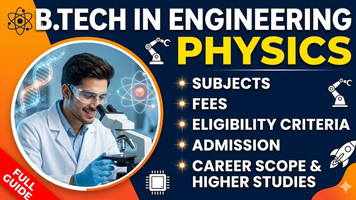
B.Tech Engineering Physics: Subjects, Fees 2026, Eligibility Criteria, Admission, Career Scope & Higher Studies
Kirti Chauhan
Jun 16 2026
B.Tech in Biotechnology: Course Details, Fees 2026, Eligibility, Admission, Scope & Placements
Kirti Chauhan
Jun 16 2026
Is B.Tech in AI Better Than B.Tech in Mechanical Engineering in 2026?
Kirti Chauhan
Jun 12 2026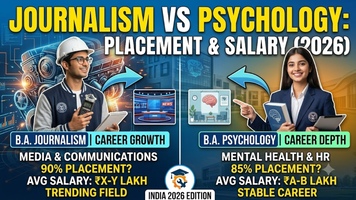
B.A. Journalism vs B.A. Psychology: Placement and Salary Comparison in 2026
Kirti Chauhan
Jun 12 2026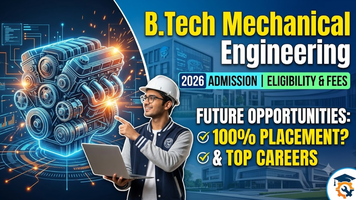
B.Tech in Mechanical Engineering: Eligibility, Fees 2026 & Future Opportunities
Kirti Chauhan
Jun 12 2026
B.Tech AI vs BCA AI: Which Course is Better After 12th?
Kirti Chauhan
Jun 11 2026
B.Sc. in Artificial Intelligence: Syllabus, Subjects, Fees 2026, Eligibility, Admission, Salary & Future Scope
Kirti Chauhan
Jun 11 2026
BBA vs B.Com: Which Course is Better for Business Careers in 2026?
Kirti Chauhan
Jun 10 2026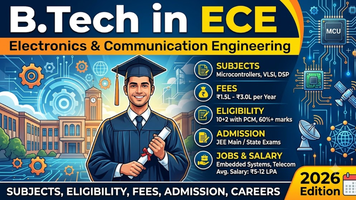
B.Tech in Electronics and Communication Engineering: Subjects, Fees, Eligibility Criteria, Admission, Jobs & Salary (2026)
Kirti Chauhan
Jun 10 2026
Learn More, Grow Faster
Get Updates Straight to Your Inbox!