
AICTE Welcomes Four-Year B.Sc (Hons) Graduates to Enroll in M.E./M.Tech Programs
The All India Council for Technical Education (AICTE) has announced that holders of the Four-Year B.Sc. (Honours/Honours with Research) degree are now qualified to apply for M.E./M.Tech programs.
The All India Council for Technical Education (AICTE) has announced a significant policy change, making graduates of the Four-Year B.Sc. (Honours/Honours with Research) degree eligible for admission into M.E. and M.Tech programs. This initiative aims to promote academic mobility and foster interdisciplinary education among students pursuing higher studies in engineering and technology. The decision follows a thorough analysis of the eligibility criteria for students transitioning from the Four-Year B.Sc. program to advanced technical degrees.
AICTE has indicated that a detailed mapping of discipline-specific eligibility for the Four-Year B.Sc. program in relation to M.E. and M.Tech courses will be released shortly, prior to the commencement of the admission process. This mapping will clarify which disciplines and specializations will be open to B.Sc. graduates, ensuring that admissions align closely with the fields where M.Sc. graduates are currently eligible.
According to the notification, candidates seeking admission to M.E. and M.Tech programs must meet specific educational prerequisites, including any required subjects relevant to their chosen course. Institutions will also have the discretion to impose additional criteria, such as minimum marks or CGPA, performance on entrance tests, GATE scores, and knowledge of the subject area, in accordance with AICTE guidelines.
In related news, the Indian Institute of Technology (IIT) Madras is set to begin registration for the GATE 2027 examination on August 27. This exam is crucial for students aiming to enroll in M.E./M.Tech and integrated PhD programs across various institutes in India. Interested candidates can apply online through the official GATE website, with the application deadline set for September 27. A late registration option will be available until October 5, 2026.
This policy shift by AICTE is expected to open new avenues for B.Sc. graduates, allowing them to pursue advanced degrees in engineering and technology, thereby enhancing their career prospects. As the education landscape evolves, this move reflects a growing recognition of the value of interdisciplinary studies and the need for flexible pathways in higher education.
Latest Articles
AICTE Welcomes Four-Year B.Sc (Hons) Graduates to Enroll in M.E./M.Tech Programs
UniList Desk
Aug 25 2026
Application Process for UID DAT 2027 Commences at uid.edu.in; Submit Your Application Today
UniList Desk
Aug 25 2026
Final Phase Allotment for AP EAMCET 2026 to Be Released Tomorrow: Review College Reporting Guidelines and Essential Steps Here
UniList Desk
Aug 25 2026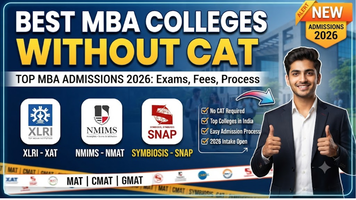
Best MBA Colleges Without CAT in India: Top Colleges, Exams, Fees and Admission Process 2026
Kirti Chauhan
Aug 25 2026
ICSI CS Executive Results for June 2026 Released; Review Group 1 & 2 Pass Rates and List of Top Performers
UniList Desk
Aug 25 2026
Deadline for KMAT 2026 Application Submission is August 31: Submit Your Application for Leading MBA Institutions in Bangalore Now
UniList Desk
Aug 25 2026
Sample Papers for CBSE Class 10 and 12 for 2027 Set to Be Released Soon; Find More Information Here
UniList Desk
Aug 25 2026
NEET PG 2026 Admit Card Available Today at natboard.edu.in; Instructions for Downloading the NBEMS Exam Hall Ticket
UniList Desk
Aug 25 2026
Kerala has announced the results for the Round 1 seat allotment of NEET UG 2026, with 5,892 candidates receiving their assigned seats.
UniList Desk
Aug 25 2026
MP NEET Round 1 MBBS Cutoff for 2026 Announced for Public and Private Medical Institutions
UniList Desk
Aug 25 2026
Learn More, Grow Faster
Get Updates Straight to Your Inbox!