
Renewable Energy Technology Courses After 12th: Eligibility, Fees & Career Scope
Careers in sustainable power are available through courses in renewable energy after the 12th grade.Renewable energy technology is a growing field in India. This field focuses on using clean and sustainable sources of power such as solar energy, wind energy, hydro energy and bioenergy. India has a rising demand for energy, and concerns about climate change are increasing. As a result, the country is investing heavily in energy technology. This has opened up education and career opportunities for students who have completed Class 12 and wish to pursue studies and jobs in renewable energy technology.
Renewable energy technology involves learning how to generate power from natural sources like the sun and wind. Students study solar panels, wind turbines and other renewable energy systems. The field also covers energy-efficient systems and smart grids that help use electricity wisely. In addition, students learn the basics of electricity, environmental protection and sustainable development. All these aspects are essential for building a cleaner and greener future through renewable energy.
Eligibility Criteria
- These programmes are open to students who have completed Class 12 from a recognised board. To be eligible, students must have studied Physics, Chemistry and Mathematics in Class 12. This requirement is mandatory for engineering and technology courses in energy technology programmes.
- For diploma programmes in energy technology, some colleges also accept students from vocational or technical backgrounds. Admission to government institutes usually requires clearing national or state-level entrance examinations.
Course Options After Class 12
Students have several options when it comes to higher education in renewable energy technology. These include diploma programmes, undergraduate programmes and integrated programmes.Diploma programmes are generally three years long and focus on practical skills that can be applied in real-world situations.
Undergraduate programmes such as B.Tech or B.E. take four years to complete and provide in-depth theoretical and practical knowledge.
Renewable energy is often offered as a specialisation within electrical engineering, mechanical engineering or energy engineering programmes. These programmes are well suited for students who are passionate about sustainability and clean energy solutions.
Government Colleges and Universities
Several government institutions in India offer programmes related to renewable energy technology. The Indian Institutes of Technology (IITs) offer B.Tech courses with a focus on energy, sustainability and related areas. The National Institutes of Technology (NITs) also include renewable energy components within their electrical and mechanical engineering curricula.
The Indian Institute of Science, Bengaluru, is a leading institution for studies in energy science and engineering, with strong research and academic programmes in this field.
State government universities such as Anna University, Jadavpur University and Delhi Technological University offer engineering programmes that cover energy technology and power systems.
Government polytechnic colleges across various states offer diploma courses in electrical engineering, power technology and renewable energy systems. These colleges are particularly beneficial for students who wish to gain technical skills at an early stage.
Fees Structure
- The fee structure in government colleges is relatively affordable compared to private institutions. Diploma courses in government colleges generally cost between Rs 5,000 and Rs 20,000 per year.
- Undergraduate engineering programmes in government colleges usually have annual fees ranging from Rs 30,000 to Rs 80,000.
- Institutions such as IITs and NITs have comparatively higher fees. However, these government-run institutes offer scholarships and fee waivers for eligible students, making them accessible to deserving candidates.
Career Scope
After completing a course in energy technology, graduates can find employment in government power projects, public sector undertakings and energy departments. Common job roles include technician, project engineer, energy analyst and maintenance officer.
Students can also pursue higher studies or research in energy engineering or environmental engineering. Renewable energy technology offers a wide range of opportunities and allows professionals to contribute directly to India’s clean energy goals.
Overall, renewable energy technology is a strong career option for students who have completed Class 12. With quality education from government colleges and universities, students can secure stable employment while playing a role in building a sustainable and energy-efficient future for India.
Latest Articles

Animation vs VFX: Which Career is Better in 2026?
UniList Desk
Apr 04 2026
Career Options After Polytechnic in 2026: A Complete Guide
UniList Desk
Apr 04 2026
Best MBA Colleges in Chennai 2026: Course, Fees & Placements
UniList Desk
Apr 04 2026
Career Options After Fashion Designing in 2026: A Complete Guide
UniList Desk
Apr 04 2026
Top Design Colleges in Mumbai 2026: Courses, Fees & Career Scope
UniList Desk
Apr 04 2026
Career Options After B.Tech in 2026: A Complete Guide
UniList Desk
Apr 03 2026
Top Architecture Colleges in Pune 2026: Courses, Fees & Career Scope
UniList Desk
Apr 03 2026
Computer Science vs Information Technology: Which One Should You Choose?
UniList Desk
Apr 03 2026
How to Become a Network Engineer in India 2026: Skills, Salary & Scope
UniList Desk
Apr 03 2026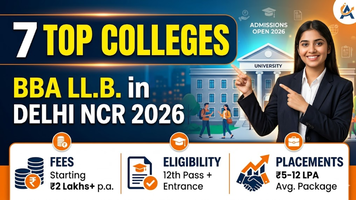
7 Top Colleges for BBA LL.B. in Delhi NCR 2026: Fees, Eligibility & Placements
Kirti Chauhan
Apr 03 2026
Learn More, Grow Faster
Get Updates Straight to Your Inbox!